
Scoliosis Care in Portage
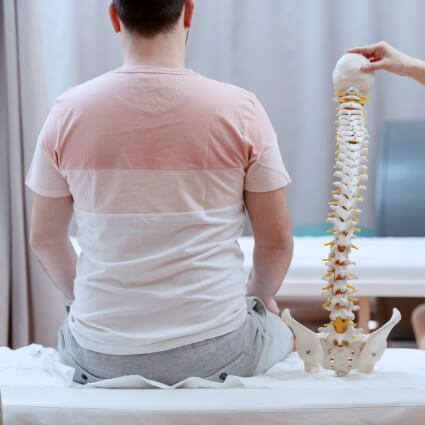 Maybe it started with a note from a school screening or someone pointing out that one shoulder sits higher than the other. Whether the curve is your child’s or your own, you want to know what it means and what the next step should be.
Not Every Lateral Curve Is the Same
Scoliosis is a lateral curve of the spine, but the type and cause matter. Adolescent idiopathic scoliosis has no known cause and develops as a child grows. It occurs more often in adolescent girls and typically includes rotation of the spine, which can also affect the position of the ribs. In other cases, significant muscle spasm in the lower back can pull the body to one side and create the appearance of a spinal curve. Determining what’s behind the postural change is an important part of the evaluation.
What Can Affect a Spinal Curve?
Several factors may be relevant when evaluating scoliosis, including:
- Age and stage of growth
- Rotation of the vertebrae and ribs
- Significant muscle contraction or spasm
- Joint restrictions that limit normal spinal motion
- Degenerative changes and loss of disc or joint space in adults
Uneven Shoulders, Hips, and Posture
A Thoughtful Approach to Imaging
For younger patients, our practice aims to avoid unnecessary radiation during periods of rapid tissue growth. X-rays aren’t automatically taken for every suspected scoliosis case. If examination findings suggest imaging is appropriate, X-rays may be taken in the office or the patient may be referred for scoliosis imaging. Existing imaging can also be reviewed when available. For a mild curve, recommendations may include monitoring and chiropractic care focused on joint mobility. Exercise can play a role as well, while adjustments may be used to address joint restrictions identified during the examination.
Mobility Through Many Stages of Life
The goals are similar for adolescents and adults: maintain the best range of motion possible for that individual and monitor changes over time. Structural, rotational scoliosis isn’t something chiropractic care makes disappear. Nor can care guarantee that a curve won’t progress. Adults may also have degenerative changes layered on top of a long-standing curve, so recommendations need to reflect what is happening with that individual’s spine. If an examination raises concerns about neurological involvement, breathing difficulty, or possible effects on internal organs, referral or co-management with another healthcare provider may be recommended.
When a Screening Raises Questions
If a sports physical or school screening identifies a possible curve, or you notice a change in your child’s posture, an examination can provide more information. At Alfieri Chiropractic Clinic, our chiropractors begin with the patient’s age and health history, followed by a physical examination. Orthopedic testing can provide additional information about the curve and whether further assessment is warranted.
Frequently Asked Questions
Can chiropractic care correct scoliosis?
What if the curve is caused by muscle spasm?
When would you refer someone with scoliosis?
Should siblings be checked too?
Get Clearer Answers About a Spinal Curve
Whether a screening raised questions about your child’s spine or a long-standing curve is becoming more noticeable with age, an evaluation can help you better understand what’s happening and what role chiropractic care may have. Contact Alfieri Chiropractic Clinic to book an assessment with one of our chiropractors.